When most people picture RV travel, they imagine quiet campgrounds, mountain views, and evenings around the campfire. We love those experiences too, but our RV city travel tips come from discovering another side of RVing. Some of our most memorable trips have taken us beyond the wilderness and into the heart of America’s largest cities.
We have camped near Philadelphia, St. Louis, New Orleans, Nashville, and Austin. Each trip gave us the freedom to return to our own space at the end of the day while still enjoying museums, historic sites, restaurants, music, and city attractions. It also taught us that traveling near a city in an RV requires a different kind of planning.
Low clearances, narrow streets, limited parking, public transportation, and crowded attractions can quickly turn an exciting city visit into a stressful travel day. The good news is that a little preparation can make an RV city adventure easier and much more enjoyable.
Our Story: Five Cities, Five Different RV Experiences
Philadelphia
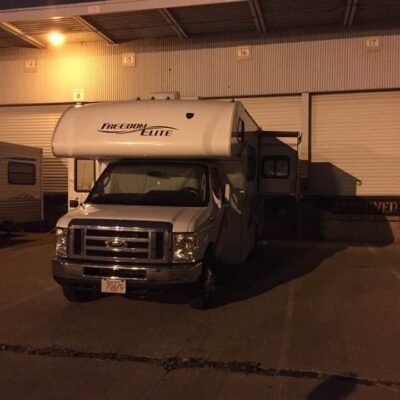
Our Philadelphia RV trip taught us an important lesson: always research your campground carefully. We stayed in what was essentially an old loading dock disguised as an RV park with hookups. The area felt a little sketchy, but its location allowed us to visit the Liberty Bell and Independence National Historical Park.
The experience reminded us that a convenient location does not always mean a comfortable campground. Before booking, read recent reviews, examine satellite images, and make sure you know exactly where you will be staying.
St. Louis
During our visit to St. Louis, we stayed at a full-hookup RV park located in a downtown parking lot. Although the RV park is no longer there, its central location allowed us to leave the RV parked and walk everywhere we needed to go. We visited Gateway Arch National Park and the City Museum without worrying about traffic or finding oversized parking. It showed us that when exploring a city by RV, a convenient campground location can be more valuable than a scenic campsite.
New Orleans
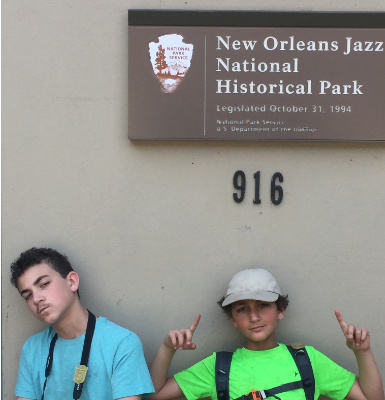
During our New Orleans RV trip, we stayed at the New Orleans RV Resort and Marina, only a few miles from Interstate 10. The campground’s free shuttle took us directly to the French Quarter, allowing us to leave the RV parked and avoid narrow streets, traffic, and limited parking. We explored the French Quarter, visited New Orleans Jazz National Historical Park and the Jean Lafitte visitor center, and enjoyed the city’s food, music, and history. The experience showed us how valuable reliable transportation can be when choosing an RV campground near a major city.
Nashville
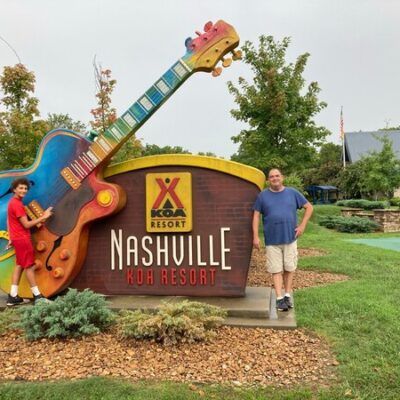
During our Nashville RV trip, we stayed at the Nashville KOA Resort, which gave us a comfortable home base close to Music City’s attractions. The campground’s shuttle allowed us to leave the RV parked while we explored downtown Nashville, enjoyed live music, and ate barbecue along Broadway. We have stayed at this campground several times because its location, amenities, and transportation options make visiting the city easier. Nashville showed us that an RV campground does not need to feel remote—it can be the perfect base for experiencing everything a major city offers.
Austin
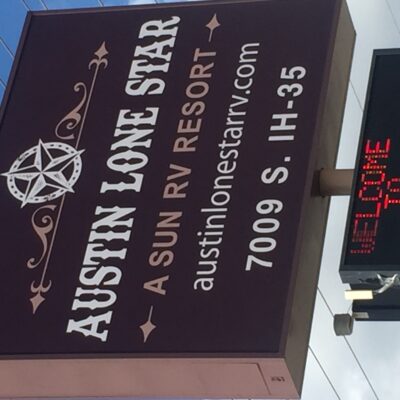
During our Texas RV trip, we stayed three nights at the Austin Lone Star RV Resort, just a few miles from downtown. Its convenient location made it easy to explore the city without taking our RV into busy urban areas. We visited the Texas Capitol, walked along Sixth Street, enjoyed Voodoo Doughnut, and watched the famous Congress Avenue Bridge bats. After a hot day of sightseeing, returning to the campground pool was a welcome bonus. Austin showed us how the right RV park can provide easy city access while still offering a comfortable place to relax.
The RVer Problem: Cities Are Not Designed Around RVs
A city trip can feel intimidating when you are driving a vehicle that is taller, wider, and longer than a passenger car. Routes that look simple on a standard map may include low bridges, weight restrictions, sharp turns, congested streets, or parking garages that cannot accommodate an RV.
The challenge does not end when the RV is parked. Popular attractions may require advance reservations, public transportation may be unfamiliar, and a packed itinerary can make everyone tired before the day is over. Successful city RV travel begins by separating two decisions: where the RV will stay and how you will explore once it is parked.
The Lesson We Learned
Our biggest lesson is simple: you do not need to drive your RV to every attraction. The RV gets you close to the city and gives you a comfortable place to stay. From there, the easiest option may be a tow car, public transportation, a campground shuttle, rideshare, a bike, or a combination of several choices.
Treat the campground as your city base camp. Plan the RV route first, then plan a separate sightseeing route that matches the size of the vehicle you will actually use inside the city.
RV City Travel Tips for Easier Urban Adventures
Choose a Campground That Makes the City Easier
- Look beyond the number of miles between the campground and downtown.
- Check whether public transportation, a shuttle, or rideshare service is realistically available.
- Read recent reviews for comments about road access, noise, security, and the surrounding neighborhood.
- Confirm site length, hookups, check-in hours, and whether a tow vehicle can remain on the site.
- Consider paying more for a convenient location if it saves hours of driving and parking stress.
Plan Around Low Clearances and Restricted Roads
- Know the exact height, length, width, and weight of your RV before leaving home.
- Use an RV-specific GPS or routing tool and compare the route with campground directions.
- Never assume a standard phone-navigation route is appropriate for an RV.
- Watch for posted bridge heights, weight limits, propane restrictions, and parkway rules.
- If the route does not look right, stop somewhere safe and reassess instead of hoping the RV will fit.
Avoid Narrow Streets Whenever Possible
- Study the final approach to the campground before travel day.
- Use satellite and street-level images to preview turns, entrances, and lane placement.
- Ask the campground which approach is safest for larger RVs.
- Avoid rush hour and major event traffic when choosing an arrival time.
- Have a passenger help watch signs, turns, and clearance hazards.
Decide Where the RV Will Be Parked
- Assume downtown RV parking will be limited unless you confirm otherwise.
- Research oversized-vehicle parking before the trip and call ahead when information is unclear.
- Do not rely on parking garages; most will not have enough clearance.
- Use designated surface lots only after checking size restrictions and security considerations.
- When possible, leave the RV at the campground and use a smaller transportation option.
Use Public Transportation as Part of the Adventure
- Locate the nearest train, subway, streetcar, ferry, or bus stop before booking the campground.
- Check operating hours, weekend schedules, fare requirements, and the return route.
- Download route maps or screenshots in case cellular service becomes unreliable.
- Build extra time into the schedule so a missed connection does not derail the day.
- Ask campground staff which transportation options other RV guests use most often
Plan for Crowded Attractions
- Reserve timed-entry tickets and tours before the trip when possible.
- Visit the most popular attraction early in the day.
- Group nearby attractions together to reduce extra travel across the city.
- Leave open time for meals, transit delays, and unexpected discoveries.
- Choose two or three priorities instead of trying to see the entire city in one day.
Frequently Asked Questions
Can you visit a major city while traveling in an RV?
Yes. The easiest approach is usually to stay at an RV-friendly campground near the city and use public transportation, a tow car, a shuttle, or rideshare for sightseeing.
Can you park an RV at city attractions?
Sometimes, but oversized parking is limited and varies by attraction. Confirm parking rules directly before arriving and avoid assuming that a garage or standard lot can accommodate the RV.
How do you avoid low bridges when driving an RV?
Know your RV’s exact height, use RV-specific routing, follow campground arrival directions, and obey all posted clearance and road-restriction signs.
Is it better to camp inside or outside a city?
The best choice depends on access, transportation, campground quality, and the attractions you want to visit. A campground farther away may be less expensive, while a closer campground may save considerable time and stress.
Final Thoughts: Your RV Can Be a City Base Camp
RVing is not always about getting away from civilization. Sometimes it is about using the RV to get closer to the places where American history, culture, food, music, and entertainment come together.
Our visits to Philadelphia, St. Louis, New Orleans,Austin, and Nashville showed us that exploring a city by RV is possible—and rewarding—when we plan for the RV’s size, choose the right campground, and leave the driving to a smaller vehicle or public transportation whenever it makes sense.
Do not let city traffic or limited parking keep a great destination off your RV itinerary. Plan carefully, stay flexible, and let your campground become the base camp for a completely different kind of adventure.