A road trip should leave you excited about where you are going. For us, choosing to avoid I-95 when the itinerary allows is part of making the drive enjoyable, too.
We first encountered I-81 on our first cross-country RV trip to the Grand Canyon. That experience gave us another option to consider when planning longer trips from New England. Today, I-81 is our preferred inland alternative when it fits our destination.
But choosing a different highway takes more thought than tapping “alternate route.” Extra miles, mountain grades, truck traffic, and campground locations all affect the day. Here is how we think through those choices—and how you can decide whether an inland route makes sense for your RV trip.
Our Story: Discovering Another Way to Travel
Our Grand Canyon trip helped shape the way we approach RV travel. The destination was a major part of the adventure, but the roads between home and the park mattered as well.

Discovering I-81 gave us a way to avoid I-95 on trips where an inland route fit our plans. We liked having an alternative to the heavily developed Northeast corridor, and the Shenandoah Valley scenery became part of its appeal.
That preference is personal. We are not promising an empty interstate or a quicker arrival. We are sharing an option that has worked for our style of travel: look beyond the first route on the map and consider how the drive will feel.
For more of the trip that introduced us to this route, read our Grand Canyon road trip story.
The Problem: The Fastest Route May Be a Difficult RV Day
If you want to avoid I-95, compare the demands of busy urban highways with the extra miles and mountain driving an inland route may bring. Navigation software can make two routes look almost interchangeable. Behind the wheel of an RV, they may feel very different.
A route with repeated interchanges, lane changes, and traffic slowdowns requires sustained attention. An inland route may exchange those demands for longer climbs, descents, and more miles. Neither choice automatically produces an easier trip.
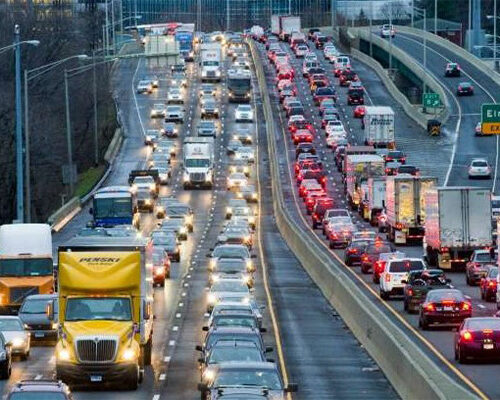
The decision also affects everyone traveling with you. Children need breaks. Pets need stops. Drivers need enough energy left to find the campground and set up after arriving.
Instead of asking only, “Which route gets us there first?” ask, “Which route gives us a manageable travel day?” That question makes it easier to compare the choices honestly.
The Lesson: Plan the Drive Around Your RV and Your Priorities
Our main takeaway is simple: the route is part of the vacation.
If adding distance helps create a day you are more comfortable driving, the tradeoff may be worthwhile. If that detour adds an exhausting final stretch or mountain driving you would rather avoid, it may work against you.
We consider the whole day: driving, fuel stops, meal breaks, traffic exposure, and campground arrival. A route is useful only if those pieces fit together.
This is especially helpful for newer RVers. Before committing to a long driving day, read our First RV Trip Mistakes We Would Avoid Today.
Our Preferred Alternative: I-81
I-81 is the first inland corridor we consider when we want to avoid I-95 for portions of a longer RV trip. Depending on how you reach it, it can help you route around the New York City, Philadelphia, Baltimore, and Washington corridor rather than passing through those areas on I-95.
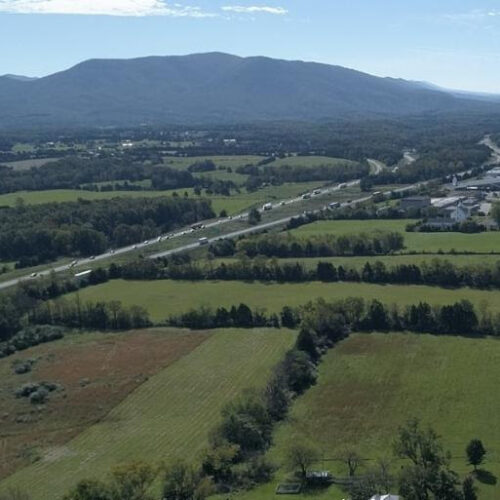
However, I-81 does not start at your driveway. The connecting roads from your home to the interstate matter, and different New England starting points require different approaches. Compare the entire route from home to your overnight stop.
There are tradeoffs. I-81 carries substantial truck traffic, and an inland itinerary may involve grades, poor visibility, or wintry conditions. Allow time to assess the forecast and road conditions along the route, especially when your trip involves higher elevations.
We prefer this corridor when it supports our trip. We still compare mileage, estimated driving time, planned stops, and conditions before choosing it.
How to Choose Your Route
| Choice | When to compare it | Tradeoffs to review |
| I-95 | Coastal destinations or a more direct itinerary | Traffic, interchanges, tolls, timing |
| I-81 inland corridor | Bypassing the Northeast metro corridor | Added distance, trucks, grades, weather |
| I-77 / I-26 connections | Connecting an inland trip toward the Southeast | Mountain sections, city traffic, route length |
| U.S. / local roads | Specific stops or deliberate sightseeing | Signals, access, restrictions, turns |
Two Inland Route Options for a Florida Trip
For travelers who can reasonably reach I-81, these are two broad southbound corridors to compare. They are planning outlines; the best route depends on your starting point and Florida destination.
Both eventually use I-95. Their purpose is to bypass portions of the Northeast and Mid-Atlantic corridor, not to remove every mile of I-95 from the trip.
Option 1: I-81 to I-77 to I-26
Follow I-81 south to the I-77 connection in the Wytheville area of Virginia. Continue on I-77 south through the Charlotte region toward Columbia, South Carolina. Connect to I-26 east, then I-95 south toward Georgia and Florida.
This may be worth comparing if Charlotte fits your itinerary or you prefer this connection to the farther-west I-26 approach. Charlotte and Columbia still require traffic planning, and the mountain portion of I-77 deserves consideration.
The key connection is I-77 to I-26 near Columbia. I-20 is not required for this particular outline.
Option 2: I-81 to I-26
Continue on I-81 into Tennessee and connect with I-26 east. Follow I-26 through the Asheville region and toward Columbia, then continue to its connection with I-95 south.
Compare this option if western North Carolina or eastern Tennessee belongs in your travel plans. It is not automatically the better choice for a direct Florida trip. Check the added distance and consider the mountain driving along the corridor.
For either option, use your actual campground addresses when comparing routes. A highway combination that looks good on a regional map may be inefficient for your particular overnight stops.
What About U.S. 301, U.S. 1, and Other Roads?
Secondary highways can help with a specific leg of a trip, but we would not choose them simply because they avoid an interstate.
U.S. 301 may be worth comparing for certain inland journeys. Review the exact section, its bridges, intersections, tolls, and connection to your destination before committing.
U.S. 1 and coastal routes can suit a slower sightseeing itinerary. They may also involve towns, traffic signals, pedestrians, and more complicated turns. Scenic does not necessarily mean easier in an RV.
Use these roads deliberately: to reach a campground, visit a destination, or bypass a particular area after checking suitability. Review suggested shortcuts before accepting them, using navigation configured for your vehicle where available.
Our Six-Step RV Route Planning Process
- Before deciding to avoid I-95, compare total mileage, realistic driving time, fuel stops, and campground locations.
- Start with the destination. Map your actual campground entrance, not just the nearest town. Review the campground’s arrival directions.
- Compare complete routes. Look at total mileage, realistic drive time, grades, tolls, and the places where you will need to change highways. Avoid assuming a detour saves money without comparing fuel and overnight costs.
- Plan the breaks. Identify fuel stops with workable access, places to stretch, and a backup stopping point. Plan around the needs of your passengers and pets as well as the driver.
- Check conditions before departure. Use state transportation sites to review closures, construction, weather impacts, and traffic. Useful resources include Virginia 511 , DriveNC , and South Carolina DOT. Recheck during the trip when parked safely.
- Leave room to change the plan. A shorter day or another overnight stop may be more useful than pushing through to preserve the original schedule. When you arrive, use your campsite setup routine rather than rushing through it.
Quick Takeaways for Your Next Trip
Choosing to avoid I-95 should help create a manageable travel day that fits your destination and your comfort behind the wheel. Compare I-81 when an inland corridor fits your destination and you are comfortable with the terrain. Keep I-95 in the comparison when it provides practical access to your destination or when an inland detour adds too much driving.
Treat smaller roads as individual route choices that need review. No highway number guarantees a relaxed day.
Most of all, build an itinerary you can enjoy driving. Arriving with enough energy to settle in matters.


8 Comments. Leave new
Can you suggest a route from 301 fl to get to 81 north
want to avoid I-95 from VA. NC, SC or thru to I-75
I’d like to travel to the GA / FL border without going through I-95 or I-295 in Jacksonville.
I’m traveling with my 2cats from Watertown NY to Richmond VA. I’d like to find a route that bypasses all the hills of Pennsylvania, I95, 495, 270. I’d like to take I81 & travel some country roads so if I need to stop I can-any suggestions would be appreciated 👍🏻
We leave for Key West Florida on May 9, 2026 from Raleigh, NC. Can you provide to me step by step driving instructions that avoid 95 south bound?
I need directions from Naples, FL to Indiantown, FL without using I95
What routes do i take from NH to get to 81 without going over the GE or Cuomo bridges?
You could take 91 south to 84w to 87s. We have taken this a few time to avoid the Cuomo and have had no issues.