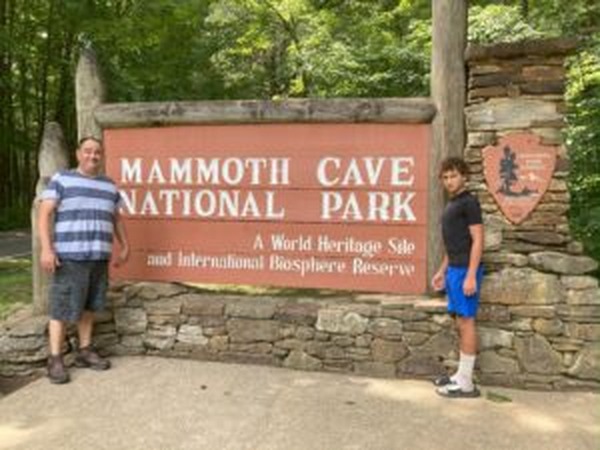
A Smoky Mountains RV trip sounds simple until you look at the map. Great Smoky Mountains National Park covers more than 500,000 acres across Tennessee and North Carolina, popular parking areas fill quickly, and several scenic roads are not suitable for RVs. With only two days to explore, we knew we needed a realistic plan—not a list of every possible stop.
We visited the Smokies during our fourth cross-country RV road trip as part of a longer journey to Nashville. National parks have always been a priority for our family, so we built our time around the experiences that mattered most: mountain views, waterfalls, wildlife, and a few places where we could slow down and enjoy the park together.
Our biggest lesson was simple: use the RV as your home base, but explore the park in a smaller vehicle whenever possible. That decision made our Smoky Mountains RV trip easier, safer, and far less stressful.

Why the Smokies Require a Plan
Great Smoky Mountains National Park is one of those places where distance can be misleading. A destination may not look far away on the map, but mountain roads, traffic, weather, wildlife, and limited parking can turn a short drive into a much longer outing.
The park does not charge an entrance fee, but a parking tag is required when a vehicle is parked for more than 15 minutes. The tag does not reserve a space, so arriving early still matters. Before leaving the campground, check current road, trail, and weather conditions. Conditions at higher elevations can be very different from those near Gatlinburg or Cherokee.
For RV travelers, planning also means knowing where not to take the rig. The National Park Service prohibits trailers, RVs, and buses on several secondary roads, including Roaring Fork Motor Nature Trail and Rich Mountain Road. Even where an RV is permitted, narrow roads and crowded parking lots may make a tow vehicle or towed car the better choice.
Our Story Two Days in the Smokies
We had two days in the area, and we knew we could not see everything. Rather than rushing from one side of the park to the other, we focused on a few memorable experiences and accepted that the Smokies would give us a reason to return.
The highlight was the climb to the observation tower at Kuwohi, the mountain formerly known as Clingmans Dome. At 6,643 feet, it is the highest point in Great Smoky Mountains National Park. The paved half-mile walk from the parking area is steep, but the tower can deliver wide mountain views when the weather cooperates.
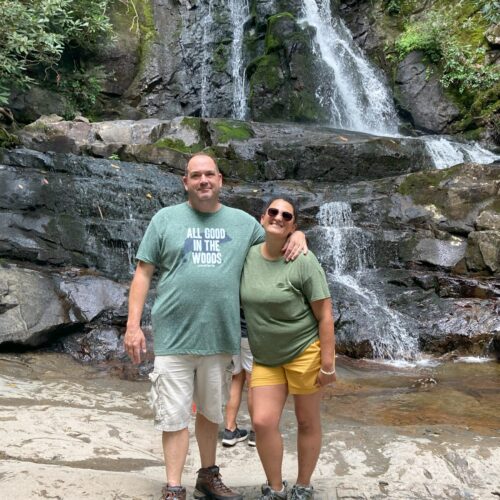
We visited during the summer, so we expected crowds and encountered long lines. We did not let that take away from the experience. We also explored waterfalls and saw wildlife, which gave our family the mix of scenery and discovery that makes a national park visit memorable.
Build Each Day Around One Area
The best way to keep a short Smoky Mountains RV trip manageable is to organize each day around one part of the park. Avoid crossing the entire park repeatedly. Choose one main experience, add one or two nearby stops, and leave room for traffic and unexpected discoveries.
Day One: Sugarlands, Newfound Gap, and Kuwohi
- Start at Sugarlands Visitor Center for maps, current conditions, and ranger guidance.
- Drive Newfound Gap Road and stop only where legal parking is available.
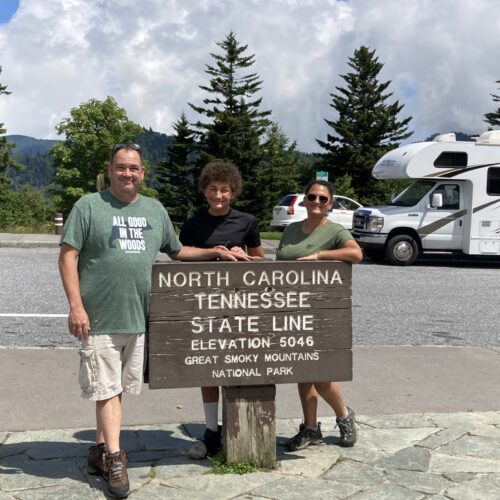
- Continue to Newfound Gap for mountain views and a chance to stand near the Tennessee–North Carolina state line.
- Drive Kuwohi Road when it is open, then walk the steep paved trail to the observation tower.
- Add one short waterfall or nature walk if time, weather, and parking allow.
Kuwohi Road closes seasonally, so confirm access before building your day around it. Weather can also hide the view, but the high-elevation forest and the climb itself still make this a worthwhile stop.
Day Two: Choose Cades Cove or the Cherokee Side
Trying to combine every major section of the park in one day can lead to more windshield time than family time. Pick the experience that best fits your campground and interests.
Cades Cove option: Drive the 11-mile loop for historic buildings, open valley scenery, and possible wildlife sightings. Traffic can move slowly, so begin early and allow more time than the mileage suggests. During the seasonal Wednesday vehicle-free period, the loop is reserved for pedestrians and cyclists.
Oconaluftee option: Explore the visitor center and Mountain Farm Museum near Cherokee, then look for elk in the surrounding area from a safe distance. Pair this side of the park with Newfound Gap if your overnight location makes that route more practical.
Where to Camp During a Smoky Mountains RV Trip
The park has developed frontcountry campgrounds, but travelers should understand what they provide before reserving. Campgrounds inside Great Smoky Mountains National Park do not offer utility hookups or showers. Reservations are required, and individual campsites have vehicle-length limits.
Cades Cove, Elkmont, and Smokemont are among the better-known options, but the best campground depends on which side of the park you plan to explore. When booking, enter the full length of your RV or trailer combination and read the details for the individual site—not just the campground description.
Greenbrier Campground: Our RV Base Near the Smokies
If hookups and easier access to restaurants or attractions are important, a private campground outside the park may be a better home base. For our visit, Greenbrier Campground gave us the combination we wanted: convenient national park access and the comforts of a full-service RV campground.
We stayed at Greenbrier Campground during our Nashville road trip and found it to be a peaceful place to return to after exploring the Smokies. The campground sits along the Little Pigeon River and offers full-hookup RV sites, clean restrooms and showers, a playground, and river access for fishing, swimming, and tubing. We especially appreciated the spacious site, helpful staff, and wooded setting.
Greenbrier Campground is a strong option for RV travelers who want to stay near Gatlinburg and the national park without giving up hookups and campground amenities. Its location helped us balance days inside Great Smoky Mountains National Park with quiet evenings around the campfire. Read our complete Greenbrier Campground review for our experience, amenities, and nearby attractions.
Practical Lessons for RV Travelers
- Leave the RV at the campground. Use a smaller vehicle for scenic drives and crowded trailheads whenever possible.
- Buy your parking tag before your first long stop. A tag is required for parking longer than 15 minutes, but it does not guarantee a space.
- Start early. Popular areas such as Cades Cove, Newfound Gap, and Kuwohi can become crowded. Check current conditions before visiting waterfalls or trailheads.
- Do not depend on cell service. Download maps and directions before entering the park.
- Check road restrictions. Some secondary roads prohibit RVs, trailers, and buses.
- Expect changing weather. Pack water, layers, rain gear, and sturdy footwear even when the campground forecast looks comfortable.
- Keep wildlife wild. Stay back, never feed animals, and follow current park distance guidance.
- Avoid overplanning. One memorable hike or scenic area is better than spending the whole day racing between stops.
When to Visit the Smokies
Every season changes the experience. Spring brings wildflowers and flowing waterfalls. Summer offers long days but also larger crowds. Fall color draws heavy traffic, especially in October. Winter can be quiet and beautiful, but seasonal roads and high-elevation access may be closed.
There is no perfect crowd-free time. The better strategy is to travel during the season that fits your family, begin each day early, and keep the itinerary flexible enough to adjust when parking or weather changes the plan.
What We Would Do Differently Next Time
Two days gave us a meaningful introduction, but not enough time to experience the park without making choices. On a return visit, we would add at least one more full day and stay closer to the section we wanted to explore first. We would also build in more time for Cades Cove or the quieter North Carolina side instead of trying to cover too much ground.
That is the advantage of treating a national park trip as an experience rather than a checklist. You do not need to see everything for the trip to matter. You need a plan that gives your family enough time to be present.
Final Thoughts
Our Smoky Mountains RV trip reminded us why national parks remain at the center of our travels. Even with summer crowds and only two days, we found mountain views, waterfalls, wildlife, and time together as a family.
The most important planning decision is to narrow your priorities. Choose the right campground, leave the RV parked when possible, organize each day around one area, and allow the Smokies to set the pace. You may leave with places still on your list, but that simply gives you a reason to return.