Finding the best national parks for RV camping with kids involves more than choosing the parks with the most famous views. Families also need to consider campground access, driving distances, activities, crowds, weather, and whether everyone will find something they enjoy.
We learned this while traveling around the country in our family RV. Our most memorable national park trips included incredible scenery, but the moments that stayed with us were often much simpler: seeing a bison beside the road, watching Old Faithful erupt, hiking into the Grand Canyon, searching for wildlife, or talking about the day’s adventures back at the campground.
These experiences taught us that a successful family RV trip does not require seeing everything. It requires a realistic plan that gives everyone time to explore, rest, and enjoy being together.
Here are five national parks that stand out for families traveling by RV.
Why National Park RV Camping Can Feel Overwhelming
Pictures of national park RV trips make the experience look easy. The reality requires careful planning.
Popular campgrounds fill quickly. Some park roads and parking areas have RV restrictions. Attractions may be farther apart than expected, and an activity that interests a teenager may not work for a younger child.
Before planning the details of a trip, we recommend answering three questions:
- Where will we camp?
- How will we travel around the park?
- Which two or three experiences matter most to our family?
Once those questions are answered, it becomes much easier to create a flexible itinerary.
Yellowstone National Park: Wildlife and Natural Wonders
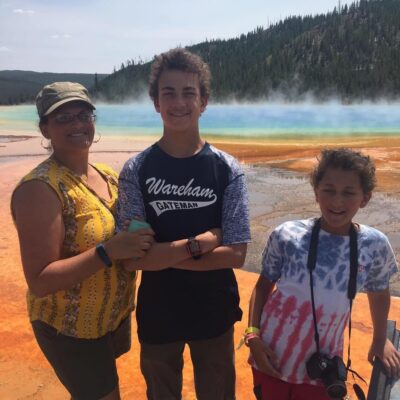
Yellowstone is one of the best national parks for RV camping with kids because almost every part of the park offers something that can capture a child’s attention.
During our family trip, Yellowstone felt like an enormous outdoor classroom. We walked along boardwalks surrounded by steaming geothermal features, watched Old Faithful erupt, and looked for wildlife as we traveled through the park.
Seeing these things in person made them more meaningful than anything our kids could have learned from a book or video.
Why Yellowstone is great for families
Yellowstone allows families to experience geysers, colorful hot springs, waterfalls, mountains, and wildlife during the same trip. The park’s Junior Ranger program also introduces children to its geology, animals, fire ecology, and natural resources.
Popular family activities include:
- Watching Old Faithful erupt
- Walking the boardwalks around geyser basins
- Looking for bison, elk, and other wildlife
- Visiting Yellowstone Lake
- Completing the Junior Ranger program
- Attending a ranger-led activity
RV campground option
Fishing Bridge RV Park is the only Yellowstone campground offering water, sewer, and electrical hookups. It only accommodates hard-sided camping units, so families should review the latest restrictions before booking. Yellowstone’s campgrounds are extremely popular. Reserve as early as possible and confirm current information on the Yellowstone National Park campground page for current information.
What Yellowstone taught us
Yellowstone is much larger than many first-time visitors expect. Trying to see the entire park in one day can leave everyone spending more time in the vehicle than exploring. Group nearby attractions together and allow extra time for traffic, wildlife jams, meals, and unexpected stops. Those unplanned wildlife sightings may become the best part of the day.
Badlands National Park: An Easy Park to Explore
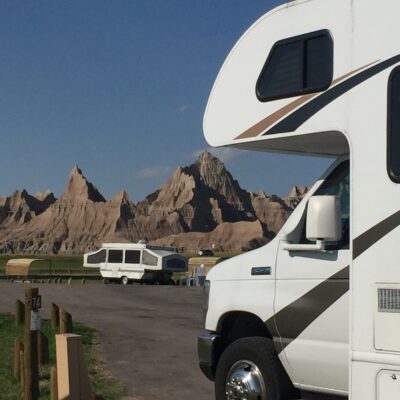
Badlands National Park captured our attention immediately. Its unusual rock formations look almost unreal, and the landscape seems to change as the light moves across the park.
Badlands is also manageable for families who want impressive scenery without committing to long hikes. The Badlands Loop Road, overlooks, short trails, and visitor center make it possible to experience the park at a comfortable pace.
Why Badlands is great for families
The landscape sparks curiosity and imagination. Children can learn about fossils, search for wildlife, watch prairie dogs, and explore short trails through the formations.
Popular family activities include:
- Driving the Badlands Loop Road
- Stopping at scenic overlooks
- Watching prairie dogs
- Searching for bighorn sheep and bison
- Exploring the Fossil Exhibit Trail
- Visiting the Ben Reifel Visitor Center
- Completing the Junior Ranger program
RV campground option
Cedar Pass Campground is located close to the Badlands Loop Road and Ben Reifel Visitor Center. Its location makes it easier to return to the campground when someone needs a break. Before booking, confirm current site sizes, services, seasonal dates, and reservation requirements on the official Badlands camping page for current information.
What Badlands taught us
You do not need an ambitious hiking plan to experience Badlands National Park. A combination of short walks, overlooks, and wildlife stops can create a full and memorable day. Summer temperatures can become extremely hot, and shade is limited. Plan walks during the cooler parts of the day, carry plenty of water, and leave time to enjoy the views without rushing.
Great Smoky Mountains National Park: Something for Everyone
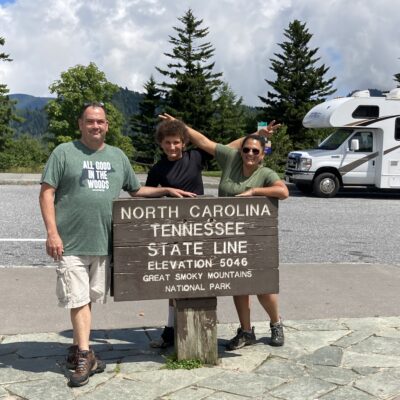
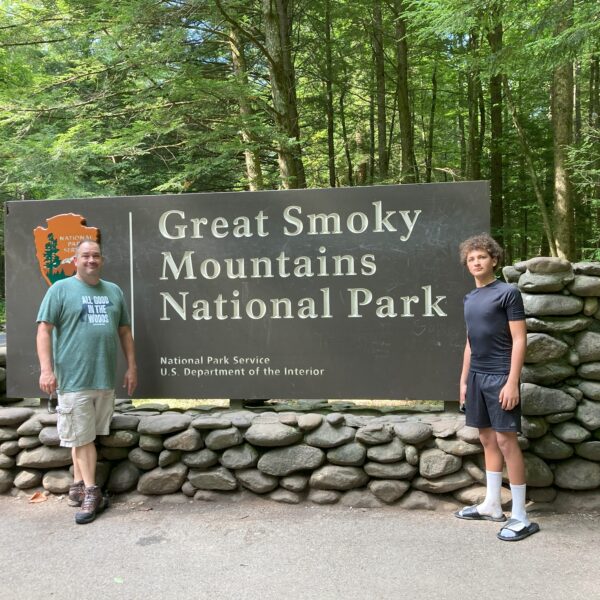
Great Smoky Mountains National Park combines mountain scenery, forests, streams, wildlife, historic buildings, and trails for different experience levels.
That variety makes it an excellent choice for families. If the kids are not ready for a long hike, you can explore a stream, visit a historic area, take a scenic drive, or stop at a visitor center.
Why Great Smoky Mountains is great for families
The park offers many ways to explore without requiring every family member to participate in the same type of activity.
Popular family activities include:
- Driving the Cades Cove Loop
- Looking for deer, wild turkeys, and black bears
- Exploring historic cabins and churches
- Walking along mountain streams
- Searching for salamanders
- Choosing a short family-friendly hike
- Completing the Junior Ranger program
RV campground option
Smokemont Campground accommodates tents and RVs and provides access to trails, streams, and the southern side of the park. Most developed campgrounds in Great Smoky Mountains National Park do not provide hookups. Families should understand their RV’s water, electrical, and waste needs before arriving. Visit the official Smokemont Campground page for current information.
What Great Smoky Mountains can teach families
A successful national park day should not be measured by the number of miles hiked. A short walk, a picnic beside a stream, time watching wildlife, and a scenic drive may be more enjoyable than rushing through a long list of attractions. Build your itinerary around what your family will actually enjoy.
Acadia National Park: Mountains Meet the Ocean
Acadia National Park offers something many other national parks cannot: rocky coastline, forests, mountains, carriage roads, and nearby communities within one destination.
Families can hike in the morning, explore tide pools in the afternoon, and finish the day watching the light change along the coast. This variety makes Acadia a strong choice for families whose members enjoy different activities.
Why Acadia is great for families
Acadia provides a mixture of outdoor adventures, scenic drives, educational opportunities, and shorter activities.
Popular family activities include:
- Biking the historic carriage roads
- Exploring tide pools at low tide
- Walking around Jordan Pond
- Visiting Sand Beach
- Hiking a family-friendly trail
- Riding the Island Explorer shuttle
- Watching sunrise or sunset
- Completing the Junior Ranger program
RV campground option
Blackwoods Campground accommodates campers and motorhomes but does not provide hookups. During its operating season, the Island Explorer shuttle stops at campgrounds and many popular park destinations. Reservations must be made in advance. Review vehicle sizes, campground dates, shuttle operations, and reservation requirements on the Blackwoods Campground page for current information.
What Acadia taught us
Transportation can shape the entire experience when visiting a popular national park. Using the Island Explorer shuttle when it fits your itinerary can eliminate parking concerns and make the day less stressful. It also lets the person who normally drives sit back and enjoy the scenery.
Grand Canyon National Park: A View That Changes Everything
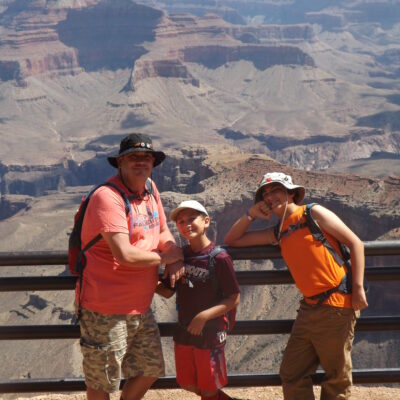
The Grand Canyon was the first national park we visited, and that trip changed how we thought about RV travel. One national park adventure helped turn RVing into a habit and inspired our goal of visiting all 63 National Parks.
Photographs cannot fully prepare you for the first time you stand along the rim. The size, depth, and colors of the canyon immediately capture your attention.
One of our favorite family memories was hiking part of the Bright Angel Trail. Walking below the rim gave us a completely different perspective, but it also reminded us to know our limits, carry enough water, and remember that the uphill return is much harder.
Why the Grand Canyon is great for families
The South Rim offers scenic viewpoints, trails, ranger programs, shuttle transportation, and activities suitable for a range of ages and abilities.
Popular family activities include:
- Walking a section of the Rim Trail
- Watching sunrise or sunset
- Riding the park shuttle
- Visiting the Yavapai Geology Museum
- Hiking a short distance below the rim
- Attending a ranger program
- Completing the Junior Ranger program
RV campground option
Trailer Village RV Campground on the South Rim offers full hookups and access to the park shuttle system. Its location can reduce the stress of finding parking near popular viewpoints. Review current availability and campground information on the Grand Canyon National Park camping page for current information.
What the Grand Canyon taught us
You do not have to hike deep into the canyon to make the trip meaningful. Choose a trail that matches your family’s experience, pay attention to the weather, and turn around before anyone becomes exhausted. The goal is not to prove how far you can hike. It is to enjoy the experience safely and create a memory everyone wants to talk about later.
How to Choose the Best National Park for Your Family
The best park is not necessarily the one with the most famous name. It is the park that works for your family’s interests, schedule, RV, and experience level.
Consider these questions before choosing:
- Will your RV fit in the campground?
- Do you need full hookups?
- How far is the campground from the main attractions?
- Does the park offer shuttle transportation?
- What activities will interest your children?
- Are the trails appropriate for everyone?
- What weather should you expect?
- How early do reservations open?
- Are pets allowed on your planned trails?
- How much driving will each day require?
We also recommend letting each family member choose one priority. One person might select a hike, another a scenic drive, and someone else the visitor center. This gives everyone something to anticipate.
What Family RV Travel Has Taught Us
Our national park adventures have given us more than photographs and places to check off a list. They have given us time together away from our normal routines.
We have also learned that plans will change. Weather will interfere, someone will get tired, and an activity that looked perfect online may not work once you arrive.
That does not mean the trip failed.
Some of our favorite memories happened when we slowed down, adjusted the plan, or sat outside the RV talking about what we had experienced that day. The RV gave us a familiar place to return to while each park offered an entirely new adventure outside the door.
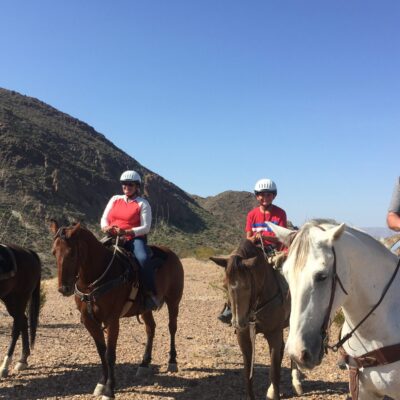
Start Planning Your Family’s National Park RV Adventure
Yellowstone, Badlands, Great Smoky Mountains, Acadia, and Grand Canyon are five of the best national parks for RV camping with kids, but each offers a completely different experience.
Choose the park that fits your family, reserve your campground early, and create a flexible plan around a few meaningful activities.
Most importantly, leave room for the unexpected moments. Those are often the stories your family will remember long after the RV is parked back at home.