Acadia National Park RV camping gives you the opportunity to experience one of America’s most beautiful combinations of rocky coastline, mountains, forests, lakes, and historic carriage roads.
Located along the coast of Maine, Acadia was one of the national parks we knew we wanted to include in our family’s journey. It offers scenic drives, family-friendly walks, challenging hikes, opportunities for bicycling and paddling, and unforgettable views from Cadillac Mountain.
However, camping at Acadia requires advance planning. Campgrounds fill quickly, campsites do not offer the same amenities as most private RV resorts, and some park roads have vehicle restrictions.
This guide shares what RV travelers should know before visiting Acadia National Park, along with lessons from our own experience.
QUICK PLANNING TIP
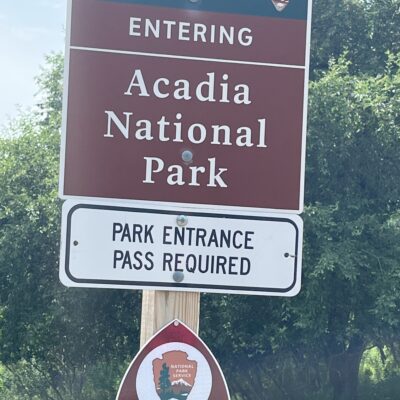
Acadia requires a park entrance pass, campground reservations must be made online, and a separate vehicle reservation is required to drive Cadillac Summit Road during the reservation season.
Where Is Acadia National Park?
Acadia National Park is located on the coast of Maine, primarily on Mount Desert Island. The park also includes the Schoodic Peninsula, Isle au Haut, and several smaller islands.
Bar Harbor is the best-known gateway community and provides restaurants, shopping, tours, fuel, groceries, and other services. Most visitors traveling from the south follow Interstate 95 toward Bangor and then continue through Ellsworth toward Mount Desert Island.
RV travelers should expect heavier traffic as they approach Bar Harbor, especially during the summer and fall foliage seasons. Some park roads are narrow, and parking at popular destinations can be difficult.
If you are towing a trailer or driving a larger motorhome, review the park’s current oversized-vehicle restrictions before arriving.
Acadia National Park at a Glance
- Location: Coastal Maine
- Established: 1916
- Park size: Approximately 49,000 acres
- Best-known area: Mount Desert Island
- Gateway community: Bar Harbor
- Popular season: Late spring through fall
- Major attractions: Cadillac Mountain, Park Loop Road, Jordan Pond, Sand Beach, Thunder Hole, carriage roads and Schoodic Peninsula
- National park campgrounds: Blackwoods, Seawall and Schoodic Woods, plus the remote Duck Harbor Campground
- Reservations: Required for all national park campsites
- RV hookups: Limited; Schoodic Woods has some electric and water options
RV Camping Inside Acadia National Park
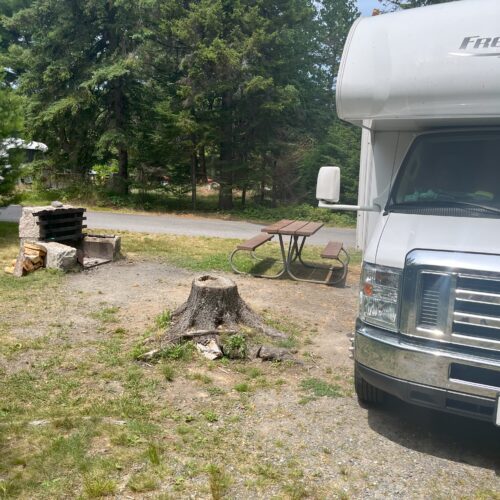
Acadia has two campgrounds on Mount Desert Island and one on the Schoodic Peninsula that can accommodate certain RVs. There is no backcountry camping, roadside overnight parking, or dispersed camping within the park.
All campsites must be reserved through Recreation.gov. Reservations cannot be made at the campground office or by arriving without a reservation.
The National Park Service currently releases most campsites six months in advance, with a smaller portion released 14 days before the arrival date. Because procedures and operating dates can change, confirm the details before every trip.
Blackwoods Campground
Blackwoods Campground is on the east side of Mount Desert Island, about five miles south of Bar Harbor. Its location makes it convenient for reaching Park Loop Road, Sand Beach, Jordan Pond and many of Acadia’s popular attractions.
Blackwoods is a good choice if being close to the park’s most visited areas is your priority. However, campers should understand that this is national park camping rather than a full-service RV resort.
Important things to know include:
- Campsites do not have electric, water or sewer hookups.
- The campground does not have showers.
- Fee-operated showers are available in nearby Otter Creek.
- Only one vehicle may be parked at each campsite.
- A park entrance pass must be displayed on vehicles in the campground.
- Reservations must be completed online.
- RV and trailer length restrictions apply.
Blackwoods and Seawall generally prohibit RVs longer than 35 feet or higher than 11 feet. Slide-outs must fit completely within the campsite’s designated pad. Always verify the restrictions for your individual site before booking.
Seawall Campground
Seawall Campground is located on the quieter western side of Mount Desert Island. It is farther from Bar Harbor and many of the busiest Park Loop Road attractions, but it offers a more relaxed location near the coast.
Seawall can be a good fit for travelers who prefer a quieter campground and do not mind driving farther to reach the park’s best-known destinations. Like Blackwoods, it does not provide RV hookups, and RV size restrictions apply.
Schoodic Woods Campground
Schoodic Woods is located on the Schoodic Peninsula, the only mainland portion of Acadia National Park. It is approximately a 75-minute drive from Bar Harbor, so it should not be treated as a convenient substitute for camping on Mount Desert Island.
However, Schoodic Woods offers a quieter Acadia experience and includes some campsites with electricity or electricity and water. It may be a better option for RV travelers who want more campground amenities and do not need to be close to Bar Harbor.
Full-Hookup RV Camping Near Acadia
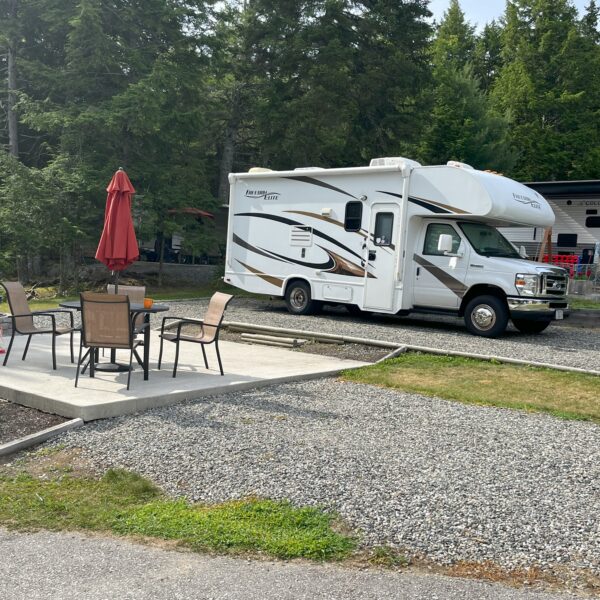
If you prefer water, sewer and electric hookups, a private campground outside the park will probably be a better choice.
Options in the surrounding area include campgrounds near Bar Harbor, Trenton and other Mount Desert Island communities. The Bar Harbor/Oceanside KOA Holiday is one example, but availability, site size, hookups and prices should be confirmed directly with each campground.
When comparing private campgrounds, consider:
- Distance from the campground to Park Loop Road
- RV and campsite length limits
- Full-hookup availability
- Access to the Island Explorer shuttle
- Laundry and shower facilities
- Pet policies
- Cellular service and Wi-Fi
- Cancellation policies
- Traffic when entering or leaving Mount Desert Island
A campground may appear close on a map but require more driving time than expected during peak season.
Cadillac Mountain Vehicle Reservations
Cadillac Mountain is one of Acadia’s most popular destinations, but a park entrance pass alone does not give you vehicle access to Cadillac Summit Road during the reservation season.
For 2026, vehicle reservations are required from May 20 through October 25. Reservations cost $6 and must be purchased online before arriving. They are not sold at the park.
Thirty percent of reservations are released 90 days in advance, while the remaining 70 percent are released two days in advance.
RV travelers should also know that recreational vehicles, trailers, and vehicles longer than 21 feet—including bike racks and hitch attachments—are prohibited on Cadillac Summit Road.
Download or take a screenshot of your reservation before entering the park because cellular service can be unreliable.
Getting Around Acadia Without Your RV
One of our strongest recommendations is to avoid using your RV as your primary sightseeing vehicle.
Parking at popular trailheads and attractions is limited, and many park roads are better suited to passenger vehicles. If you are traveling in a motorhome without a separate vehicle, campground location and public transportation become especially important.
The fare-free Island Explorer shuttle connects communities, campgrounds, carriage-road entrances and many trailheads around Mount Desert Island and the Schoodic Peninsula. It does not travel up Cadillac Summit Road.
During crowded periods, the National Park Service recommends arriving before 8 a.m. or after 5 p.m. whenever possible.
Things to Do at Acadia National Park
Drive Park Loop Road
Park Loop Road connects many of Acadia’s best-known destinations, including Sand Beach, Thunder Hole, Otter Point, Jordan Pond and access to several hiking areas.
Take your time and plan several stops rather than treating it as a drive-through attraction.
Visit Cadillac Mountain
Cadillac Mountain offers panoramic views of the surrounding islands, coastline and mountains. Sunrise is especially popular, but daytime and sunset visits can be just as memorable.
Remember that driving to the summit requires a separate vehicle reservation during the designated season.
Explore Jordan Pond
Jordan Pond is surrounded by mountain scenery and offers a relatively level path around the water. The complete loop is longer and more rugged than it first appears, so allow enough time and bring suitable footwear.
Jordan Pond House is also known for its popovers, but waits can be long during peak season.
Bike the Carriage Roads
Acadia contains miles of historic carriage roads that provide an excellent way to explore the park by bicycle. Some routes are more strenuous than they appear, so review the elevation and distance before starting.
Visit Sand Beach and Thunder Hole
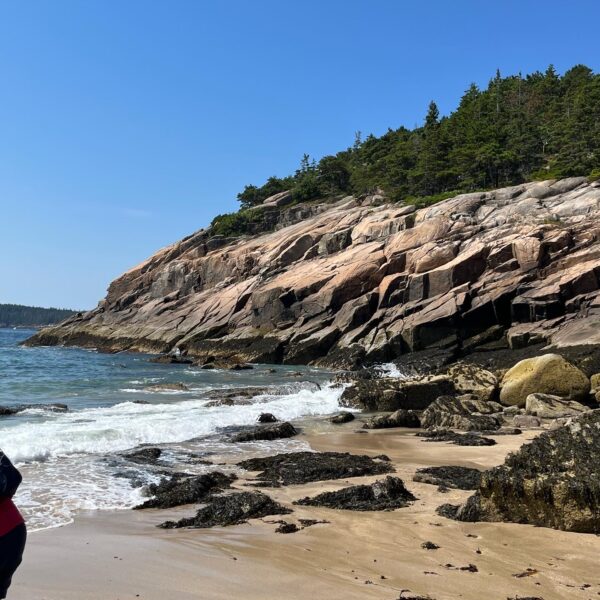
Sand Beach sits between granite mountains and the Atlantic Ocean. Nearby Thunder Hole can create a dramatic sound and splash when waves enter the narrow rocky inlet, although the effect depends on the tide and ocean conditions.
Choose a Hike That Matches Your Ability
Acadia offers everything from relaxed shoreline walks to steep routes involving exposed ledges, iron rungs and ladders.
The Beehive and Precipice trails are exciting but are not appropriate for every visitor. Families should research trail conditions carefully rather than choosing a hike based only on its distance.
Explore the Schoodic Peninsula
The Schoodic Peninsula offers rugged shoreline views and generally feels quieter than Mount Desert Island. It is worth considering if you have an additional day or are staying at Schoodic Woods Campground.
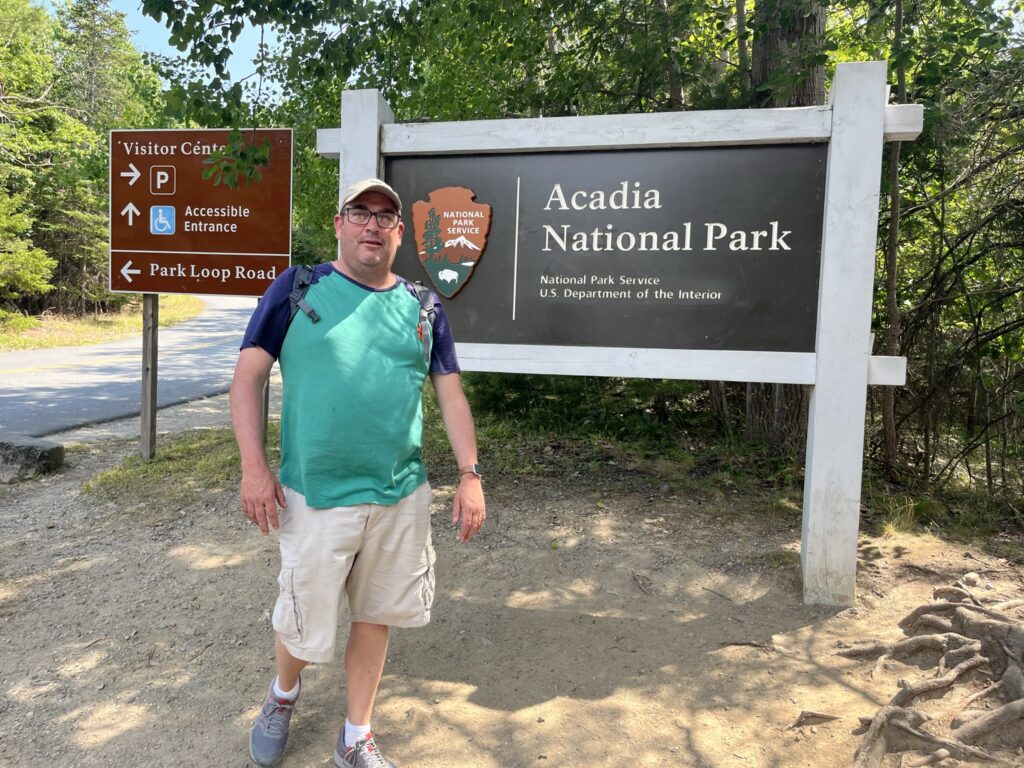
Our Acadia National Park Experience
Our visit to Acadia reminded us why national parks became such an important part of our family’s RV travels.
Staying at Blackwoods Campground placed us close to many of the park’s most popular areas while still giving us the experience of camping among the trees. We explored the park, took in the coastal scenery and spent time together without needing a complicated schedule.
What stood out most was the variety. Acadia did not feel like a park with only one major attraction. The experience changed throughout the day—from mountain views and forest trails to rocky shoreline and quiet evenings at the campground.
Like many of our trips, not every moment needed to be spectacular to become memorable. Sometimes the best part was simply returning to the campsite and talking about everything we had seen that day.
Acadia became another meaningful stop in our continuing journey to visit all 63 national parks—and a park we would gladly visit again.
Final Thoughts
Acadia National Park combines mountains, forests and rocky Atlantic coastline in a way that feels unlike any other park we have visited.
For our family, it was more than another destination. It was another chapter in the journey that began when we purchased our first RV—and another step toward our goal of visiting all 63 national parks.
If Acadia is on your RV travel list, reserve early, understand the vehicle restrictions and give yourself time to enjoy the park without rushing.
The road to all 63 national parks is a long one, and that is exactly what makes the journey worthwhile.