Visiting Boston National Historical Park with your family turns American history into an experience children can see and explore. Because we live on Cape Cod, Boston is close enough for us to revisit, yet walking the Freedom Trail, standing at Bunker Hill, touring the Charlestown Navy Yard, and following the events of April 19, 1775, still feels like stepping into the beginning of the country’s story.
This guide explains how to explore Boston National Historical Park with your family while also including nearby Minute Man National Historical Park in Lexington, Lincoln, and Concord. We share what families should prioritize, how to reach the city, where we camped, what costs to expect, and how to divide the experience into two manageable days.

Boston National Park Sites at a Glance
- Main downtown park: Boston National Historical Park
- Nearby companion park: Minute Man National Historical Park
- Best downtown starting point: Faneuil Hall Visitor Center
- Main walking route: The 2.5-mile Freedom Trail
- Best transportation: Public transit and walking; leave the RV at the campground
- Admission: Boston National Historical Park has no entrance fee, but partner-operated historic sites may charge admission
- Time needed: One full day for downtown Boston and one full day for Minute Man National Historical Park
- Family highlights: Junior Ranger activities, historic ships, interactive exhibits, monuments, and ranger programs
| Our quick advice: Do not try to combine downtown Boston and Minute Man National Historical Park into one rushed day. Treat them as two separate experiences and choose fewer sites so children have time to understand what happened in each place. |
Understanding the Boston National Park Sites
Boston National Historical Park is a partnership of federal, City, and privately operated locations across Boston. Many—but not all—are connected by the Freedom Trail, and hours, fees, security, and accessibility vary by site. Minute Man National Historical Park is a separate NPS unit west of Boston that protects locations associated with the opening battles of April 19, 1775. Together, the parks follow the story from resistance in Boston to fighting at Lexington and Concord.
Begin at Faneuil Hall Visitor Center
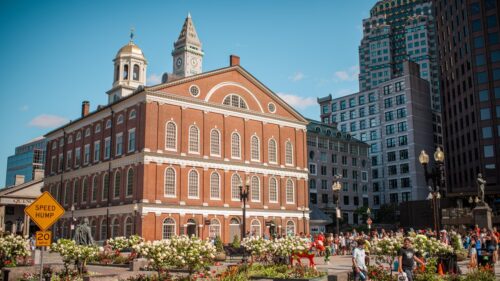
For a first visit, begin at the Faneuil Hall Visitor Center. Rangers can provide maps, schedules, Junior Ranger information, and advice about which sites are open. Faneuil Hall’s Great Hall is also an important historic destination where generations of Bostonians gathered for debate, protest, and public events.
The visitor center generally operates Tuesday through Sunday during the main season, with fewer winter days. The Great Hall can close for City events, so confirm hours. Seasonal Freedom Trail walks and free Faneuil Hall talks add helpful context.
Walk Boston’s Freedom Trail as a Family
The Freedom Trail is a 2.5-mile route marked by a red brick or painted line through downtown Boston and Charlestown. It connects 16 official historic sites, including Boston Common, Granary Burying Ground, Old South Meeting House, Old State House, Faneuil Hall, Paul Revere House, Old North Church, USS Constitution, and Bunker Hill Monument.
The route is not a loop, and stops, meals, crowds, and tired feet make the day much longer than 2.5 miles suggests. Choose locations that fit your children’s interests instead of treating all 16 sites as a checklist.
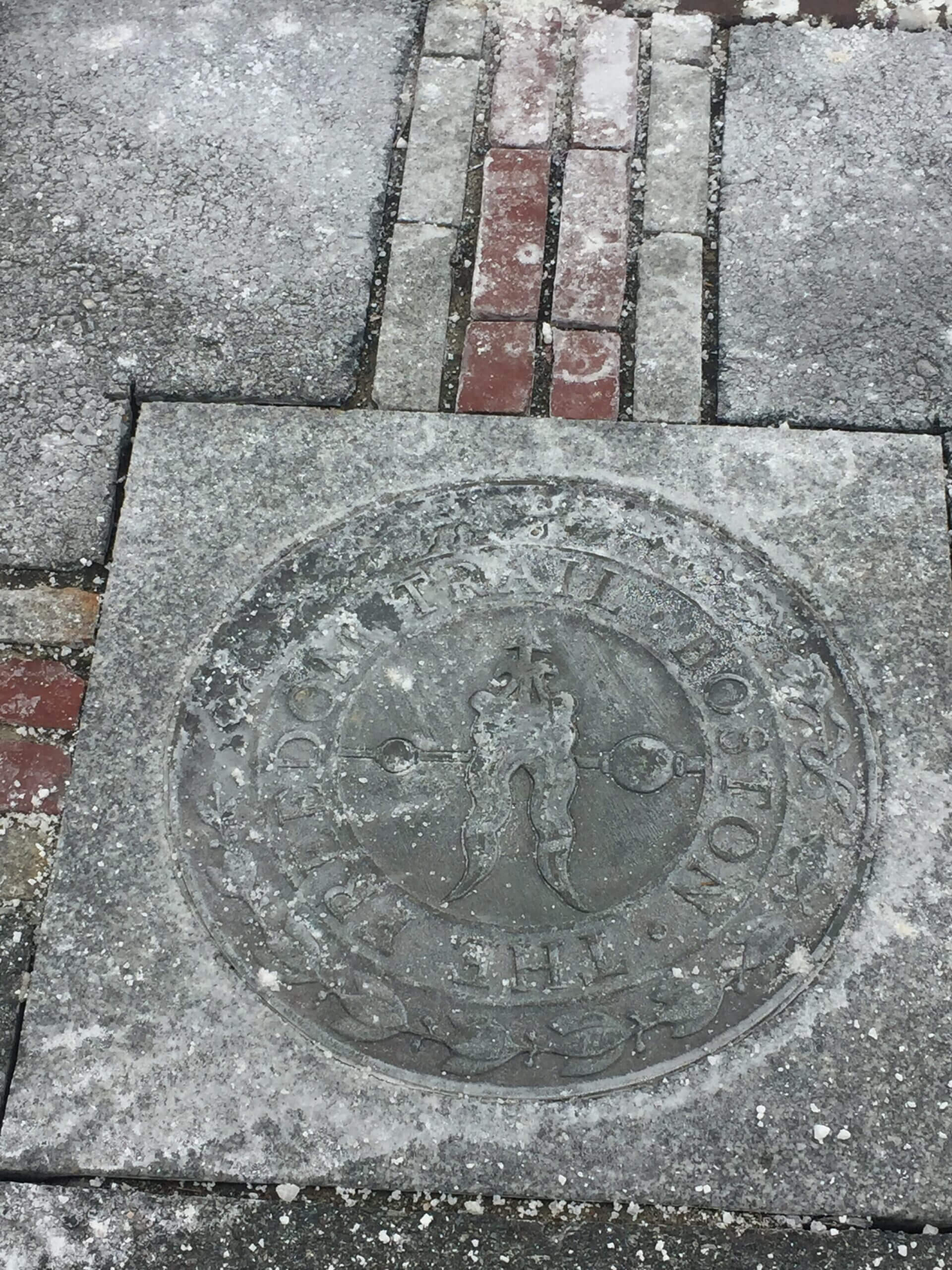
Freedom Trail Stops We Recommend
Granary Burying Ground
Granary Burying Ground is the final resting place of Paul Revere, John Hancock, Samuel Adams, and victims of the Boston Massacre. It is a short stop, but reading familiar names on the markers helps children connect people from textbooks to an actual place. Remind younger visitors that this is an active historic cemetery and should be treated respectfully.
Old South Meeting House and Old State House
Old South Meeting House is associated with the meeting before the Boston Tea Party, while Old State House interprets colonial government and the Boston Massacre. These partner-operated, ticketed sites provide a useful indoor break.
Faneuil Hall
Faneuil Hall combines an NPS visitor center with the historic Great Hall. Admission to the National Park Service portions is free. The nearby market area is convenient for food, but it can be crowded and should not be confused with the historical interpretation upstairs.
Paul Revere House and Old North Church
The North End sites bring Paul Revere’s story into focus. Both are operated by park partners and charge modest admission. Narrow sidewalks and busy streets can slow families, so build extra time into this section of the trail.
Climb the Bunker Hill Monument
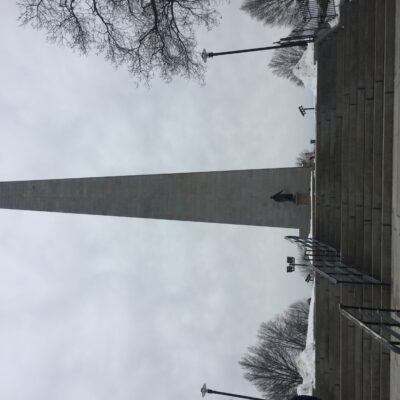
Bunker Hill Monument stands on Breed’s Hill and commemorates the Revolution’s first major battle. The grounds, lodge, and museum are free, and the museum helps families understand the battle before seeing the monument.
Visitors may climb 294 stairs inside a tight spiral stairway to reach the observation level. There is no elevator, only 25 people are allowed inside at one time, and climbing can close because of weather or safety conditions. Consider each family member’s comfort, health, and energy before committing to the climb.
Plan a Separate Day at Minute Man National Historical Park
Minute Man National Historical Park is one of our favorite Boston National Park sites, but it deserves its own day. Begin at the Minute Man Visitor Center in Lincoln, where the 27-minute Road to Revolution program introduces April 19, 1775. Pick up maps and Junior Ranger booklets and ask about ranger programs.
Battle Road Trail
The five-mile Battle Road Trail follows historic landscapes between Concord and Lexington. Families can use several parking areas to sample shorter sections, historic homes, fields, and interpretive stops.
North Bridge and the Minute Man Statue
The North Bridge area is where colonial militia were ordered to fire on British soldiers, an exchange remembered as the ‘shot heard round the world.’ The bridge, river, commemorative landscape, and Minute Man statue make this one of the park’s essential stops. The North Bridge Visitor Center is about 500 yards from the battle site and operates seasonally.
RV Camping and Transportation for Boston
Driving a large RV through downtown Boston is stressful and unnecessary. Streets are narrow, parking is limited and expensive, tunnels and clearances require attention, and traffic can turn a short distance into a long travel day. Leave your RV at the campground and use a smaller vehicle, public transit, commuter rail, ferry, or rideshare depending on your route.
We stayed at Boston Minuteman Campground in Littleton, about 13 miles from Minute Man National Historical Park and roughly 30 miles northwest of Boston. Its wooded setting gave us a quiet base after sightseeing. It works especially well when Minute Man is a priority, although the trip downtown is longer.
Before reserving, confirm current site length, hookups, campground rules, transit options, and travel times. Boston traffic varies dramatically by time of day, construction, events, and season. Leanr more at our guide to RV camping in National Parks.
Costs and Reser
vations
Boston National Historical Park does not charge an entrance fee at federally or municipally owned sites such as Faneuil Hall, Bunker Hill Monument and Museum, USS Constitution, and Dorchester Heights. Ranger talks and NPS tours are also free. Privately operated partner sites charge their own admission and do not accept national park passes.
As of 2026, a combined Old State House and Old South Meeting House ticket is $15 for adults, $13 for seniors and students, and $8 for children 12 and younger. Other partner sites have separate fees. Confirm prices and hours before traveling.
What We Learned Visiting Boston with Kids
Our experience reinforced that historical travel works best when children have time to look, ask questions, and connect one location to the next. Walking Boston makes the story feel real, but trying to cover every site can quickly turn an educational day into a tiring checklist.
If we were planning the trip again, we would choose a few must-see Freedom Trail stops, schedule an indoor break, and save Minute Man National Historical Park for the following day. We would also check every operating schedule the night before, because the National Park Service and partner sites do not all share the same hours.