A Fort McHenry RV visit belongs on the list for travelers who enjoy combining a road trip with American history. Standing near the water, looking toward the fort and seeing the flag flying above the ramparts gives the story of our national anthem a sense of place that a textbook cannot match. But for RV travelers, this is also one of those destinations where the experience begins long before reaching the entrance gate.
Fort McHenry National Monument and Historic Shrine sits inside Baltimore. That means interstate traffic, city streets, limited parking, and tunnel rules that can quickly turn a simple stop into a stressful travel day. We learned that Fort McHenry is absolutely worth visiting—but it is much easier when you separate the historic experience from the challenge of getting a large RV through a busy city.
Why Fort McHenry Is Worth the Stop
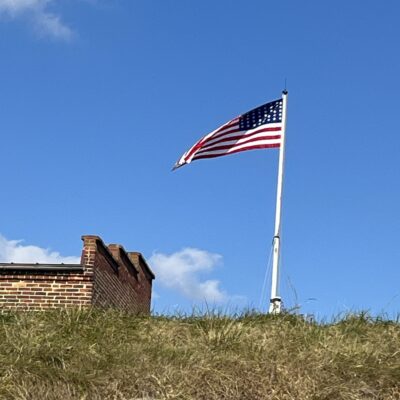
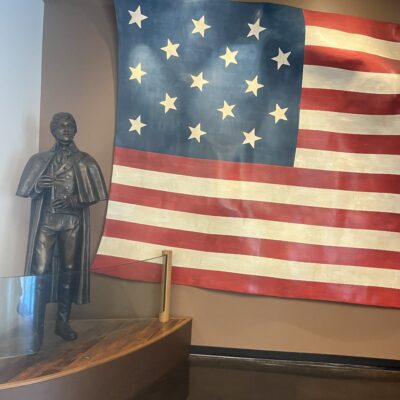
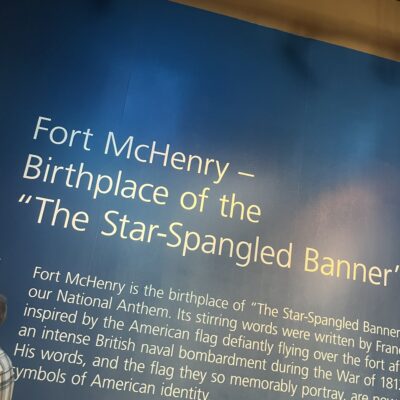
Fort McHenry is best known for the Battle of Baltimore in September 1814. British ships bombarded the fort for approximately 25 hours but failed to break Baltimore’s defenses. When Francis Scott Key saw the large American flag still flying above the fort the next morning, the scene inspired the words that became “The Star-Spangled Banner.”
The story is powerful, but the site offers more than a single moment in the War of 1812. Fort McHenry later served during the Civil War, became the location of a major military hospital during World War I, and was used as a U.S. Coast Guard training station during World War II. Walking through the star-shaped fort, barracks, earthworks, and waterfront grounds helps connect those different chapters of history.
We recommend beginning at the Paul S. Sarbanes Visitor and Education Center. The exhibits and short orientation film provide the background that makes the fort more meaningful. From there, visitors can explore the historic Star Fort at their own pace or join a ranger program when one is offered.
The RVer Problem: Fort McHenry Is in the Middle of Baltimore
Many National Park Service locations are reached by scenic highways or quiet park roads. Fort McHenry is different. It is located at the end of East Fort Avenue in an urban and industrial part of Baltimore. The final approach may include heavy traffic, lane changes, narrow-feeling city streets, delivery vehicles, construction, and drivers who already know exactly where they are going.
In a passenger vehicle, those conditions are manageable. In a Class C motorhome, travel trailer, or fifth wheel, they require more attention. A navigation app may also choose the fastest route without understanding your RV’s height, width, weight, or propane system. The route that looks easiest on a phone may send an RVer toward a tunnel that the vehicle cannot legally use.
The Biggest RV Challenge: Baltimore Tunnel Restrictions
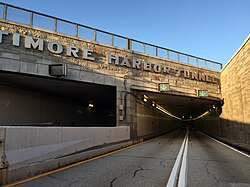
This is the detail RVers should check before leaving the campground. The Maryland Transportation Authority prohibits vehicles carrying bottled propane gas in excess of 10 pounds per container from using the Fort McHenry Tunnel on I-95 or the Baltimore Harbor Tunnel on I-895. Because many motorhomes and towable RVs carry propane containers larger than that limit, a typical RV may not be permitted through either tunnel.
Do not assume that turning off the propane makes the RV legal for tunnel travel. The restriction concerns the propane being carried, not whether an appliance is operating. Confirm the current rules for your specific RV and plan an approved route before travel. The former Francis Scott Key Bridge alternative is unavailable following the bridge collapse, so older RV directions and online discussions may no longer provide a usable detour. Check current Maryland transportation information and use an RV-safe GPS or routing tool that accounts for propane and vehicle dimensions.
Our Lesson Learned: Make Fort McHenry a Day Trip
The easiest solution for most RV travelers is to leave the RV at the campground and visit Fort McHenry in a smaller vehicle. If you tow a car, this is the perfect day to use it. If you do not, consider a rideshare, taxi, or public transportation rather than bringing the motorhome into Baltimore.
This approach removes the tunnel and oversized-vehicle questions, makes city traffic less intimidating, and gives you more flexibility if the main parking lot is busy. It also allows you to combine Fort McHenry with another Baltimore stop without worrying about where to park the RV between attractions.
For us, this is the difference between forcing a destination into a travel day and building a realistic plan around it. Fort McHenry can fit into a half day, but trying to stop while towing or while moving between campgrounds may create more pressure than the visit deserves.
A Four-Step Plan for a Stress-Free Fort McHenry RV Visit
1. Choose an RV-friendly base
Select a campground outside central Baltimore and treat the fort as a day trip. Before booking, ask about access from the highway, whether your route avoids restricted tunnels, and whether the campground offers information about transportation into the city.
2. Plan the route before departure
Do not rely only on the default route from a standard GPS. Compare the route with current MDTA restrictions and Baltimore traffic alerts. If you must bring the RV, call the park before arrival to discuss current parking conditions, and have a legal backup plan.
3. Arrive early
Fort McHenry parking is free but first come, first served. The main lot is limited, and busy weekends, special events, school groups, and seasonal events can increase demand. Early arrival provides a better chance of parking and cooler temperatures for walking the grounds.
4. Give the history enough time
Plan approximately two to three hours for the Visitor Center film and exhibits, the Star Fort, the waterfront grounds, and a ranger program. A quicker visit is possible, but rushing through misses the moment when the site’s history begins to feel real.
What RVers Should Know About Parking
The National Park Service provides free parking on a first-come, first-served basis. A designated bus lane and limited bus spaces are available, but those areas should not be treated as guaranteed RV parking. Vehicles may not park, idle, load, or unload in the fire lane in front of the Visitor and Education Center.
If you plan to arrive in a motorhome or with a trailer, contact the park ahead of time. Ask whether your specific vehicle can be accommodated on the date and time of your visit. Special events can change access, and overflow parking is not guaranteed to be suitable for every RV combination. Never count on being able to turn around easily after entering a crowded city lot.
What to Do at Fort McHenry
- Watch the orientation film. The approximately 10-minute presentation explains the Battle of Baltimore and the writing of the national anthem.
- Explore the Visitor Center exhibits. Artifacts and interactive displays introduce the War of 1812 and the history of the flag.
- Walk through the Star Fort. The historic area is self-guided, allowing visitors to explore the barracks, ramparts, and fortifications at their own pace.
- Attend a ranger program. Depending on the season and staffing, programs may include flag changes, the American anthem, the Battle of Baltimore, and other topics.
- Walk the grounds. The park includes waterfront views and a one-mile recreation trail.
- Complete the Junior Ranger program. Kids can use the activity booklet to learn about the site and earn a badge.
Helpful Takeaways for RV Travelers
- Treat Fort McHenry as a planned Baltimore day trip instead of an unplanned travel-day stop.
- Check propane and vehicle restrictions before selecting any route involving I-95 or I-895 tunnels.
- Use a smaller vehicle or rideshare when possible.
- Arrive early because free parking is first come, first served.
- Allow two to three hours so the visit feels meaningful rather than rushed.
- Check park hours, ranger programs, fees, traffic alerts, and special-event notices shortly before the trip.
Frequently Asked Questions
Can an RV drive through the Fort McHenry Tunnel?
Many RVs cannot because of Maryland’s propane restrictions. Vehicles carrying bottled propane over the permitted limit are prohibited from both the I-95 Fort McHenry Tunnel and I-895 Baltimore Harbor Tunnel. Verify the current rule for your exact setup before routing.
Can you park an RV at Fort McHenry?
The park has free first-come, first-served parking and designated spaces for buses, but it does not guarantee parking for every size RV or tow combination. Call ahead before arriving in a large vehicle.
How long should we spend at Fort McHenry?
Two to three hours is a comfortable visit for the film, exhibits, Star Fort, grounds, and a ranger program. Allow more time during special events.
Do you have to pay to visit?
The grounds, Visitor Center exhibits, film, and parking are free. Admission is charged for the historic Star Fort area. Current NPS information lists the fee as $15 for visitors age 16 and older; younger visitors are free.
Is Fort McHenry worth visiting with children?
Yes. The short film, recognizable story of the American flag, open grounds, ranger programs, and Junior Ranger activities make the site accessible for families.
Final Thoughts: The History Is Worth the Extra Planning
A Fort McHenry RV visit is a perfect example of why RV travel requires more than choosing a destination. The fort is not difficult to enjoy, but reaching it with a large vehicle can be complicated by Baltimore traffic, limited parking, and tunnel restrictions. A little planning changes the entire experience.
Leave the RV at your campground when possible, check transportation restrictions, arrive early, and give yourself time to stand beneath the flag and understand what happened there. Fort McHenry may not offer mountain overlooks or long wilderness trails, but it delivers something just as memorable: the chance to stand where one of America’s most familiar symbols became part of our national story.